
A solar battery bank becomes essential when energy reliability, independence, and flexibility matter more than simple grid access. Many households first consider storage after experiencing outages, rising electricity costs, or a need to keep certain appliances running no matter what. Others discover the value when they begin using solar panels and realize that without storage, excess sunlight goes unused. A system like the Anker SOLIX F3000 paired with a 400W portable solar panel demonstrates how stored energy supports everyday life by delivering fast solar recharging, long standby capability, and scalable capacity. Understanding the specific moments when storage becomes necessary helps homeowners evaluate whether energy resilience is already a priority in their lives.

Situations That Make Solar Storage Necessary
Frequent or Extended Blackouts Turn Storage Into a Real-World Essential
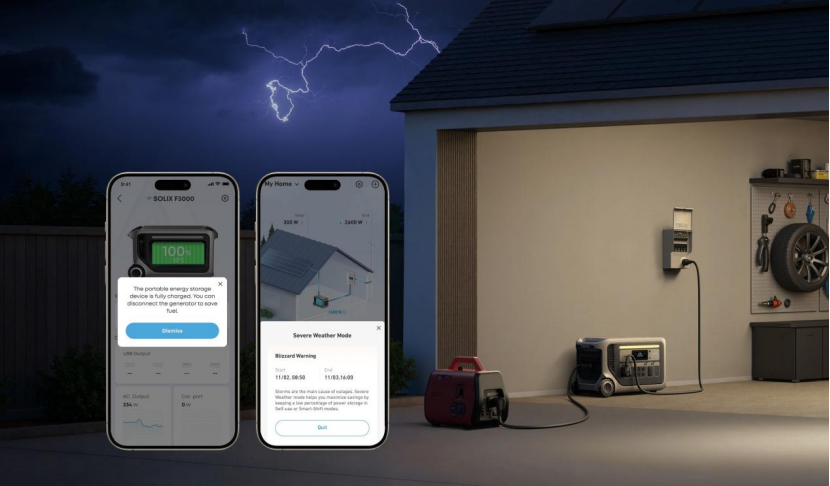
A solar power battery becomes essential when grid outages occur often or last long enough to disrupt daily life. Power interruptions affect more than comfort—they compromise food safety, connectivity, and the ability to work or care for household members. In these situations, having stored solar energy means refrigerators stay cold, lights stay on, and communication devices remain usable. The F3000 supports these critical needs with low idle consumption and the ability to power an 8 cu.ft fridge for nearly two days. During long outages, its 5-day AC standby behavior keeps the system ready even when energy is not actively being used. For homes where outages are routine or seasonal, storage shifts from a convenience to a necessity.
Households That Depend on Essential Devices Need Uninterrupted Power
Some appliances cannot lose power without causing immediate problems. Medical devices, home office equipment, routers, and refrigeration all fall into this category. Families who rely on these devices view reliable power as non-negotiable. A solar battery bank fills this gap by ensuring that essential loads remain active regardless of grid reliability. Because the F3000 supports 3,600W pass-through charging, users can run these devices while energy replenishes from solar panels. This continuous cycle ensures that important equipment stays powered all day. When independence and safety matter, having stored solar energy is not optional—it’s foundational.
Homes in Remote Areas Often Lack Stable Grid Access
In rural regions, the grid may be available but unreliable, or in some cases nonexistent. Off-grid cabins, mobile homes, and remote work setups rely on energy systems they can control. Solar storage is the practical solution for these environments because it ensures usable power during cloudy periods, at night, and during seasonal changes. The F3000’s dual-voltage solar input allows fast solar capture on clear days, keeping the system ready even when weather shifts. Users who live or travel in remote areas benefit from the system’s versatility, including ports designed for RV life and support for high-demand appliances when paired with a second unit. In these settings, storage is essential for daily survival and routine functionality.
Life Situations Where Storage Adds Meaningful Value
Growing Interest in Lower Energy Bills Creates Demand for Stored Power
A solar battery becomes essential when homeowners want to reduce reliance on peak-time grid rates. Time-of-use pricing makes electricity far more expensive during certain hours of the day. With stored solar energy, households can shift consumption away from these high-cost periods, powering devices from the battery instead of the grid. The F3000 supports this approach through smart energy optimization, which can store free solar or off-peak power for later use. Families aiming to manage budgets or reduce energy waste often discover that storage allows them to take full advantage of rooftop or portable solar without losing excess production during the day.
People Working From Home Require Power Stability
Remote workers rely on steady electricity to maintain productivity, attend video meetings, and communicate with clients. Even brief outages interrupt work and cause stress. A solar battery bank becomes essential for these workers because it guarantees a stable environment regardless of grid fluctuations. Pass-through charging on the F3000 keeps laptops and routers online while solar input restores the system, making home offices more resilient. This stability reduces downtime and strengthens work-life reliability. For remote workers who cannot afford interruptions, storage is a practical investment that adds continuity and peace of mind.
Families Want Flexibility and Energy Independence for Travel or Emergencies
Solar batteries empower households to live more flexibly, whether preparing for emergencies or taking energy on the road. RV travelers, outdoor enthusiasts, and people who maintain emergency kits benefit from portable storage that remains ready for unexpected needs. With dual-voltage solar charging and the ability to expand capacity up to 24kWh, the F3000 adapts to both short trips and extended off-grid stays. Families who value mobility or preparedness rely on stored solar energy because it ensures control in unpredictable situations. This combination of independence and readiness makes a solar battery bank feel essential long before a crisis occurs.
Conclusion
A solar battery bank becomes essential whenever consistent, independent, and flexible power directly improves everyday life. Homes that experience outages, depend on essential devices, or operate in remote locations see immediate benefits. Families aiming to reduce electricity costs or support work-from-home setups find that stored energy creates stability and control. Systems like the Anker SOLIX F3000 with a 400W portable solar panel show how storage transforms solar power from a daytime resource into an all-day, all-weather solution. With fast solar recharge, long standby capability, and scalable capacity, storage becomes a practical foundation for energy resilience. For many households, the moment storage becomes essential arrives sooner than expected—often when reliability begins to matter more than the grid itself.
Visited 1 times, 1 visit(s) today